
Google AI Mode Is Killing Your Website Traffic, And Sometimes Lying About Your Brand. Here's the Data and the Fix.

Dharmendra Asimi
SEO Expert & WordPress Professional since 2005
Last week, I sat in a monthly review call with a US-based pharmaceutical client. We pulled up their organic traffic chart for the corporate website. The line told the story before either of us said a word.
Traffic was down nearly 50% year over year. No algorithm penalty. No site migration. No content changes. The pages still ranked. People just stopped clicking.
Then we went deeper. We typed the company's name into Google. The AI Overview at the top of the page summarized the company, listed its product pipeline, and included a drug that was no longer in development. A product the company had publicly discontinued months earlier. There it was, sitting confidently in a Google AI summary, being read by investors, journalists, doctors, and patients.
The traffic loss was bad. The misinformation about the brand was worse.
This is not an isolated incident. It's the new reality for nearly every business with a website. And it's only the beginning.
This article is the most extensive analysis I've put together on what's actually happening, based on real data from publishers, lawsuits, my own client work, and the latest 2026 research from Pew, Ahrefs, Chartbeat, Similarweb, and Gartner. It's long because the topic deserves it. By the end, you'll understand exactly what's broken, why it's broken, what to do about it, and where this is going.
Key Takeaways
- Global publisher traffic from Google is down 33% in the year to November 2025 (Chartbeat, 2,500+ publisher data).
- Click-through rates drop 46.7% when AI summaries appear (Pew Research). Top-ranking pages see 58% CTR decline (Ahrefs).
- Chegg lost $14 billion in market cap, a 99% destruction of shareholder value, primarily attributed to AI Overviews.
- AI Mode hallucinates in up to 48% of health queries, often with confident language masking wrong information.
- By 2028, organic search traffic could drop 50% or more (Gartner forecast). 75%+ of Google queries will show AI summaries.
- The fix: Schema markup, structured content for AI extraction, off-site entity presence (Wikidata, Crunchbase), and content AI cannot replace (original research, primary expertise, multimedia).
Part 1: What's Actually Happening, The Numbers Are Brutal
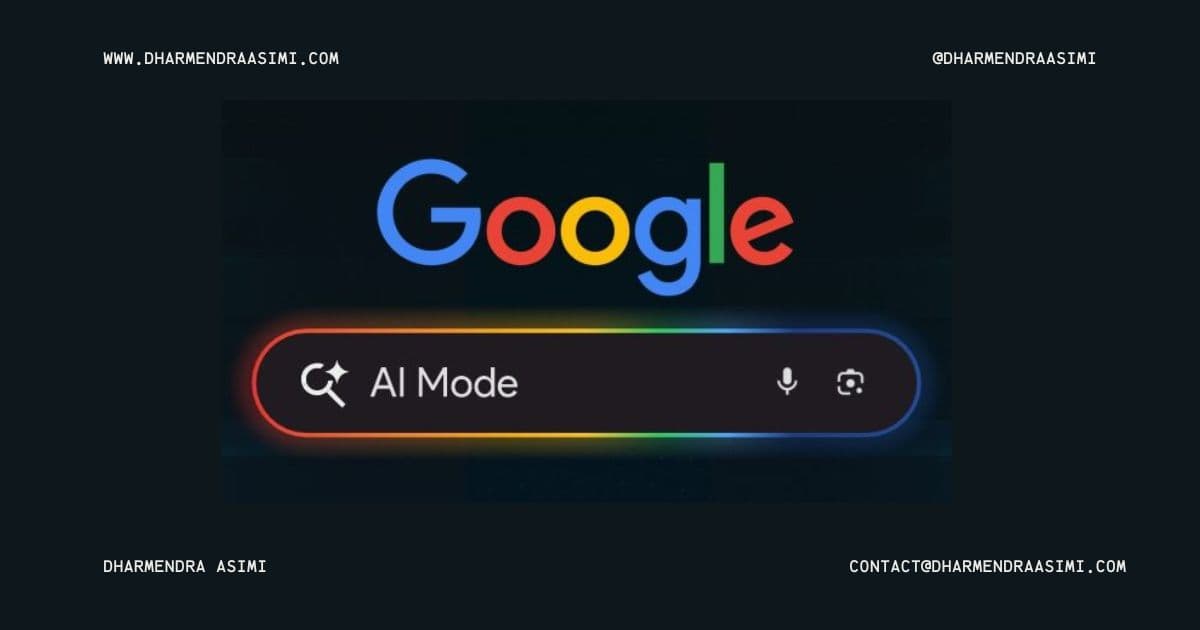
Google rolled out AI Overviews (now expanding into "AI Mode") starting in May 2024. By 2026, it's the largest single shift in how search has worked since the launch of the green hyperlink. The data tells a clear story.
According to Press Gazette and Chartbeat data covering 2,500+ publisher websites, global publisher traffic from Google has declined by roughly one-third in the year to November 2025. Pew Research Center found that when AI summaries appear in search results, users click through to websites just 8% of the time, compared to 15% without summaries. That's a 46.7% relative drop in click-through rates.
An Ahrefs study published in early 2026 looked at top-ranking pages and found that AI Overviews correlate with a 58% reduction in click-through rates for those pages. Seer Interactive's September 2025 study went further, organic CTR plummeted 61% for queries where AI Overviews appeared.
Click-Through Rate Decline
Sources: Pew Research, Ahrefs, Seer Interactive
These aren't outliers. They're the new normal. And they're only telling half the story, because the absolute numbers are even more brutal than the percentages.
The Real-World Body Count
Let's look at what these declines look like in actual companies:
- CNN, Visits dropped from approximately 440 million in 2024 to roughly 311-323 million by mid-2025. That's a 27-38% loss in a single year.
- Business Insider, Lost 55% of organic search traffic between April 2022 and April 2025. The decline accelerated dramatically after AI Overviews launched.
- Forbes and HuffPost, Both recorded 50% traffic losses in roughly the same window.
- The Planet D, Travel blog lost half its traffic in months after AI Overviews. Laid off staff. Lost another 90%. Shut down entirely. The first publicly documented business killed by AI Overviews.
- Stack Overflow, Once the default destination for programming questions, has seen its question volume drop dramatically as developers ask Claude or ChatGPT instead. The site is now actively repositioning around AI training data licensing.
The most catastrophic example, though, isn't a publisher. It's an education company.
Case Study: How Chegg Lost $14 Billion in Three Years
Chegg was the textbook (literally) example of search-dependent business. Students searched homework questions, found Chegg's answers, signed up for subscriptions. The model worked beautifully, until ChatGPT and Google AI Overviews changed how students get answers.
The numbers are staggering:
- Market capitalisation collapsed from $14.7 billion to approximately $115 million, a 99% destruction of shareholder value
- Annual revenue dropped from a $776 million peak in 2021 to an annualised ~$290 million in 2025, a 63% drop in four years
- Q4 2025 revenue fell 49% year-over-year to just $72.7 million
- Organic traffic dropped from 5.6 million to 3.7 million visitors in months, a 34% decline
- Organic keyword visibility shrunk from 11.1 million keywords to 3.5 million, a 68% collapse
- Non-subscriber traffic plummeted to negative 49% in January 2025 alone
The company laid off 22% of its workforce in May 2025, then another 45% (388 employees) by October 2025. Chegg's CEO publicly told investors that the AI Overviews launch was "as material" to the decline as ChatGPT itself.
In February 2025, Chegg sued Google over AI Overviews. The traffic was already gone.
This isn't about Chegg making bad decisions. It's about the fundamental ground shifting under any business whose model depends on Google sending them visitors. And it's coming for everyone.
Part 2: The Industries Hit Hardest (And One Surprise Survivor)
The damage isn't evenly distributed. Some industries have been hit catastrophically. Others have actually grown. The pattern is revealing.
Traffic Impact by Industry (2025)
Sources: Chartbeat, Similarweb, Press Gazette, Chegg public filings, industry reports
Let's break down each category, because the patterns within each industry tell you whether your business is in danger.
News and Publishing, Devastated
News is the most visible casualty. The industry-wide decline is 38% (Chartbeat data, 2,500+ publishers), but individual publishers have seen worse. The reason is simple: the bulk of news content (definitions, explanations, summaries of events) is exactly what AI Mode is best at synthesizing. Why click through to an article that explains "what is the new tax law" when the AI Overview gives you the summary?
Publishers are responding in three ways. Some are doubling down on premium subscriptions and original reporting that AI can't replicate (The Atlantic, The Information). Some are suing Google, Penske Media filed an antitrust lawsuit in September 2025, joined by Chegg in February 2025. Others are quietly preparing to shut down or sell.
Health and Medical, Catastrophic and Dangerous
Health queries trigger AI Overviews more than almost any other category. Click-through rates to actual medical websites have dropped 40-60%. WebMD, Healthline, Mayo Clinic, all major medical destinations have seen significant traffic erosion.
The danger here is twofold. First, the traffic loss threatens the business models of medical content sites that fund their reporting through advertising. Second, and this is the part nobody is talking about enough, AI Mode produces inaccurate medical information in up to 48% of cases according to 2025 research. People are getting medical advice from AI summaries that are confidently wrong.
One documented case: Google AI Overview gave incorrect guidance for pancreatic cancer patients about treatment options. Another: misleading explanations of liver function tests. A third: false information about cancer screening guidelines. These aren't theoretical risks. They're documented harms.
Travel and Tourism, Severe Declines
"Best time to visit Bali." "Things to do in Tokyo." "Top hotels in Goa." These queries used to send millions of visitors to travel blogs, booking sites, and destination guides. Now they get answered directly in the AI Overview.
The Planet D wasn't unique, it was just early. Multiple travel content sites have shut down or pivoted away from search-dependent traffic. The ones surviving are either booking platforms (where the transactional intent saves them) or specialist authorities with proprietary information (off-the-beaten-path destinations, niche travel categories).
EdTech and Education, Existential Crisis
This is the category that produced the Chegg story, but it's not just Chegg. Course Hero, Quizlet, Brainly, Numerade, every homework help and study tool company is being squeezed. Students who used to subscribe for answers can now ask ChatGPT, Claude, or Google AI Mode for free.
The decline numbers in EdTech are 50-68% across the major players. The structural problem: their entire business model assumed people had to come to them for answers. AI dissolved that assumption.
SaaS and B2B, Gradual Bleeding
SaaS companies face a more subtle decline of around 25%. Their traditional content pillars, how-to guides, feature comparisons, industry definitions, are highly susceptible to AI summarization. The "how to write a SQL query" search now answers itself. The "what is product-led growth" search gets a complete AI summary.
SaaS survivors are pivoting to original research, proprietary data, customer case studies, and bottom-of-funnel content (specific product comparisons, pricing pages, demo requests) that AI can summarize but can't replace as a conversion experience.
Recipe and Food Blogs, Surprisingly Hit
Recipe sites built massive businesses on "how to make banana bread" type queries. AI Overviews now display full recipes directly, killing the click. Food blogs, many run by individual creators who depend on display ad revenue, have seen 35% traffic drops on average.
Local Services, Less Affected (For Now)
Local service businesses (plumbers, lawyers, dentists, contractors) have been less affected so far, about a 15% decline. Local intent queries ("plumber near me", "best dentist in Bangalore") still drive clicks because users need to contact a specific business. But Google is actively building local AI features that will likely change this in 2026-2027.
E-commerce, The Surprise Survivor
Here's the counterintuitive finding: e-commerce traffic actually grew slightly (about 5%) in the AI Overview era. Why?
AI Overviews appear on only 3.2% of e-commerce queries. Google initially showed them on 29% of shopping queries but pulled back dramatically, because AI responses weren't converting into sales. When someone wants to buy something, they want to compare products, see reviews, check prices, see images. AI summaries get in the way of conversion. Google noticed and adapted.
The lesson: where transaction intent is strong, AI Overviews are deprioritized. This is one of the few signals about where Google is headed.
Part 3: The Misinformation Problem No One Is Talking About Enough
The traffic loss is the headline. But there's a quieter, arguably worse problem: AI Mode confidently presents wrong information about your business, and you have no easy way to correct it directly.
This is what happened with my pharma client. The AI summary listed a product that didn't exist in their pipeline anymore. It wasn't malicious. It wasn't a competitor smear. It was an AI synthesizing from outdated articles, archived press releases, and forum discussions, then presenting an incorrect picture as fact.
The scale of this problem is staggering. Research published in 2025 found that AI models produce inaccurate "hallucinated" responses in up to 48% of cases when answering health and medical queries. A 2026 enterprise study calculated that each enterprise employee now costs companies roughly $14,200 per year in time spent verifying and correcting AI-generated misinformation.
The Hallucination Paradox
When AI is wrong, it sounds more confident, not less.
+34%
More likely to use confident language ("definitely", "certainly") when generating incorrect information
48%
Of AI-generated health responses contain inaccuracies, according to 2025 medical research
$14,200
Annual cost per enterprise employee for verifying and correcting AI hallucinations
33-51%
Hallucination rate on OpenAI's "reasoning" o3 series, newer models often hallucinate more
The Four Categories of AI Misinformation Damaging Brands
Across my client work and the research literature, I've seen AI hallucinations damage brands in four distinct ways:
- Outdated facts presented as current. Old prices. Discontinued products listed as available. Former employees described as current. Company leadership from three years ago. Mergers that happened years ago described as "recent". AI doesn't know what year it is, or which version of reality is current.
- Fabricated details that sound plausible. Made-up clinical trial results with invented efficacy percentages. Fake awards. Fictional company milestones. Quotes attributed to executives that the executives never said.
- Wrong attributions. Quotes from one person attributed to another. Products from one company listed under a different company's name. Funding rounds credited to wrong investors.
- Conflation of similar entities. Two companies with similar names get merged. A consultant gets confused with someone else of the same name. Two products in similar categories get described as one.
Why AI Hallucinates About Brands Specifically
Brand-related hallucinations follow predictable patterns. Understanding them helps you predict where you're vulnerable:
- Sparse training data. AI models have read more about Apple than about your mid-sized B2B company. When they have less data, they're more likely to fill gaps with plausible-sounding fiction.
- Conflicting sources. If your old website said one thing and your new website says another, AI may pick the wrong source, usually the older one, because it's been indexed longer.
- Forum and social media noise. AI engines pull from Reddit, Quora, forums, and social media. If someone there described your business inaccurately, that wrong information feeds into AI summaries.
- Industry-wide assumptions. AI assumes your business does what other businesses in your category do. If you're an exception, AI gets you wrong.
- Press release lifecycle. Old press releases never die, they just get re-cited. Product announcements from 5 years ago still pop up in AI summaries about your current offerings.
Part 4: Why Is This Happening? Three Forces Converging
To fix this, you have to understand why it's happening. Three forces are converging, and none of them are reversible.
Force 1: Google's Survival Imperative
Google is being attacked from multiple sides. ChatGPT has over 800 million weekly active users by late 2025. Claude has become the developer-and-professional default. Perplexity has carved out a strong research niche. Younger users especially are bypassing Google entirely, Gen Z increasingly uses TikTok, Instagram, and AI chatbots as their primary search.
Google's response has been to inject AI directly into search, making the search engine itself an answer engine. The business calculation is brutal but rational: Google would rather hold the user's attention with an AI answer than send them to a website where they might never come back. Every click that leaves Google is a click Google doesn't monetize as efficiently.
This is also why Google is fighting an antitrust battle with the DOJ. In April 2026, the Department of Justice secured a landmark remedies victory. The court order prohibits Google from entering exclusive contracts for distribution of Google Search, Chrome, Google Assistant, and the Gemini app. The DOJ is also cross-appealing for Chrome divestiture. The legal pressure is real, but the AI Mode rollout continues.
Force 2: User Behavior Has Shifted
Users actually like AI answers. When research finds that 64.82% of searches now end without a single click, that's not just a Google product decision, it reflects what users want. They want fast answers. They don't want to sift through 10 blue links and 3 ads. The AI summary, even when imperfect, often gives them what they need without the friction.
This is the hardest part to accept. AI Mode isn't being forced on people. It's being adopted enthusiastically. Survey data from 2025 shows that:
- 78% of users find AI summaries "somewhat or very reliable"
- 65% prefer the AI Overview format over traditional 10 blue links
- 71% report they've stopped clicking through "most of the time" because the AI answer is sufficient
- Among Gen Z users, 52% report using ChatGPT or Claude as their primary search tool
Force 3: Content Has Become a Commodity
For 20 years, the SEO playbook was: write more content, rank for more keywords, capture more traffic. Every business followed it. The result is millions of pages saying nearly the same thing about every conceivable topic.
AI is exceptional at synthesizing common knowledge. When 50,000 articles all explain "what is WordPress maintenance", an AI doesn't need to send users to any one of them. It can summarize the consensus and move on.
The content arms race produced a commodity. AI is the natural endgame of commodity content. The blogs that survived this transition, and a few are thriving, are the ones with content nobody else has: original research, primary data, specific expertise, hard-won opinions.
Part 5: The Zero-Click Future Is Already Here
The numbers tell a clear trajectory. Zero-click searches (queries where users get an answer without clicking any result) have climbed steadily for years, and AI Mode is accelerating the curve.
The Rise of Zero-Click Search
Source: Similarweb, SparkToro, Gartner forecasts
Gartner predicts that by 2028, organic search traffic to websites will be down 50% or more as users fully embrace generative AI search. About 50% of Google searches already display AI summaries. By 2028, that figure is projected to exceed 75%. The clicks are not coming back.
Worried About Your Site's AI Visibility?
Get a Free AI Search Strategy Call
15 minutes. No pitch. We'll review where AI search is sending traffic for your industry, and what your site needs to fix.
Book a Free Call →Part 6: How Each AI Search Engine Sources Information Differently
To get cited (and to fix wrong information about you), you need to understand how each AI engine actually works. They're not the same. Each pulls information from different places, weighs sources differently, and rewards different content patterns.
| AI Engine | Primary Sources | Update Speed | Best Optimization |
|---|---|---|---|
| Google AI Mode | Google index, Knowledge Graph, schema markup | Hours to days | Schema, FAQ format, fresh content |
| Perplexity | Real-time web RAG, news, Wikipedia | Hours | Recent, cite-worthy content |
| ChatGPT (with web) | Bing index + training data | Mixed (training cutoff matters) | Authoritative, well-structured pages |
| Claude | Training data + web search (when enabled) | Slow (training cutoffs) | Authoritative entity data, Wikipedia |
| Gemini | Google index + training data | Days | Same as Google AI Mode |
| Grok | X (Twitter) data + web | Real-time | X presence, recent content |
Three key insights from this table:
- Reddit is now the most-cited domain by LLMs. Surpassing even Wikipedia in 2025-2026. Earned media (Reddit threads, forum discussions, third-party mentions) accounts for 48% of all LLM brand citations.
- Brand mentions across the web correlate 3x more strongly with AI visibility than backlinks. The old SEO currency (links) matters less than the new AI currency (mentions, references, entity associations).
- Pages updated within 2 months earn 28% more citations than older content. Freshness has become a major ranking factor for AI engines.
Part 7: The Fix, How to Survive (and Win) in the AI Mode Era
The doom-and-gloom is the easy part. The actual question is: what do you do about it? Here's the honest answer based on what's actually working in 2026.
You can't beat AI Mode at giving short answers. You won't out-summarize Google's Gemini. The strategy isn't to fight the AI, it's to be the source the AI cites and build content the AI can't replace.
Step 1: Make Your Site Machine-Readable (Schema Markup)
AI engines extract facts from structured data. If you don't tell them what your business is, what you sell, who your team is, and what each page is about, they'll guess. And they'll guess wrong.
The four schema types that matter most for AI Mode citations:
- Organization schema, Establishes your business identity, logo, social profiles, founding date, contact info, and entity links across the web. Without this, AI engines struggle to verify who you are and reduce trust accordingly.
- Article / BlogPosting schema, Tells AI what each page is about, who wrote it, when it was published, and when it was last updated. Authorship signals matter more in 2026 than at any point in the past decade.
- FAQPage schema, The single highest-impact format for AI Mode extraction. Answers between 40 and 60 words get pulled directly into AI Overview panels and "People also ask" boxes.
- Product / Service schema, Critical for any business that sells anything. Includes pricing, availability, ratings, and service details that AI Mode cites in commercial queries.
Pages with this combination are 2.5 to 2.7 times more likely to be cited than pages running on no schema, according to a 2026 schema markup study.
Step 2: Structure Content for Extraction
AI Mode looks for content that directly answers a user's question in the first 1-2 sentences of a section. Long, winding intros don't get cited. Definition-style openings do.
The structural pattern that wins:
- Every H2 or H3 heading is a question or a clear topical statement
- The first paragraph immediately under the heading directly answers it (40-80 words)
- Specific numbers, dates, and entities appear in that first paragraph
- Supporting detail follows for human readers, but the AI has already extracted what it needs
This is the opposite of how most blog content is written. Most articles bury the answer 200 words in. AI doesn't read past the buried lead.
Content with statistics, citations, and quotations achieves 30-40% higher visibility in AI responses. Be specific. Cite sources. Use real numbers.
Step 3: Update Aggressively (Especially Brand Pages)
AI hallucinations often stem from outdated content that's still being indexed. If your "About Us" page hasn't been updated in 3 years, AI might still be citing your old positioning. If your product pages list discontinued items, AI will keep mentioning them.
Audit and update on this schedule:
- Company About page, annually minimum, ideally quarterly
- Product / service pages, whenever offerings change (within 30 days)
- Team / leadership pages, within a week of any departure or new hire
- Press releases and news, mark old content as archived after 6 months
- Pricing pages, always reflect current prices
- Blog posts on evergreen topics, refresh annually with updated stats
Add visible "Last updated" dates and matching dateModified in your schema. AI engines weight recent content heavily, pages updated within 2 months earn 28% more citations than older content.
Step 4: Claim and Control Off-Site Entities
AI Mode triangulates information about your brand from across the web. If you're missing from key sources, AI fills gaps with whatever it finds. Critical off-site presence:
- Wikidata entry, Free, fast to create, and one of the most cited sources by AI engines. Most businesses don't have one. This is the single highest-leverage off-site move.
- Wikipedia article (if eligible), The single biggest authority signal AI engines use. Requires notability, but many businesses qualify and don't realize it.
- Crunchbase profile, Heavily cited in business and investor queries
- LinkedIn Company Page, Source of truth for employment, leadership, and recent updates
- Reddit presence, As the #1 most-cited domain by LLMs, having authentic discussions about your business on Reddit (not spam) drives citations
- Industry directories specific to your sector, Healthcare directories for pharma, B2B directories for SaaS, etc.
- GitHub presence, For tech businesses, even a simple README can become an AI source
If your business is incorrectly described on any of these, fix it immediately. AI Mode pulls heavily from these sources to verify and synthesize answers.
Step 5: Add llms.txt and ai.txt Files
An emerging standard called llms.txt lets you tell AI engines what your site is about and where to find canonical content. Early adopters are seeing measurable citation lifts. Add a /llms.txt to your site root with a markdown index of your most important pages. It costs nothing and signals sophistication to AI crawlers.
Similarly, ai.txt declares your AI-training preferences (allow/disallow/monetise). Optional, but signals a thoughtful AI posture.
Step 6: Build Content AI Can't Replace
The content most vulnerable to AI Mode is generic explainer content. The content least vulnerable to AI Mode shares these traits:
- Original primary research, Surveys, studies, proprietary data nobody else has. AI can summarize commodity research; it can't replicate research that doesn't exist anywhere else.
- First-person expertise, Specific stories, cases, and lessons from real client work. The pharma client story in this article is exactly this kind of content.
- Strong opinions backed by evidence, AI synthesizes consensus; it's bad at conviction. Take positions. Be willing to be wrong.
- Visual content, Original diagrams, infographics, charts (like the ones in this article), and videos that can't be summarized in text
- Tools and calculators, Functionality, not just information. AI can describe a calculator; it can't be one.
- Community and discussion, Spaces where humans interact (forums, comments, communities)
- Audio and video content, Hard for AI to summarize meaningfully. AI Overviews link to videos but don't replace them.
Notice what's missing from this list: "10 ways to improve your SEO", "What is X explained", or any other commodity educational content. That content will be summarized away. The content above won't be, because there's no consensus to synthesize, only specific human expertise.
Step 7: Diversify Beyond Google
The honest reality: Google traffic will continue to decline regardless of what you do. The smart play is to build presence on platforms where AI hasn't yet eaten the click economy:
- LinkedIn, Long-form content here still gets meaningful organic reach
- YouTube, Video remains AI-resistant
- Newsletters, Direct relationships, no algorithm intermediating. Substack, Beehiiv, Convertkit.
- Podcasts, Audio is hard for AI to summarize meaningfully
- Communities (Discord, Slack, Reddit, niche forums), Where real conversations happen
- Direct partnerships, Cross-promotion, guest content, bundled offerings
- Email lists, The most resilient asset you can build right now
Part 8: Specifically, How to Correct AI Misinformation About Your Brand
This is the part most articles skip. Here's the practical playbook for when AI Mode gets your business wrong.
Step 1: Audit What AI Mode Says About You
Search your business name in Google AI Mode. Search your founder's name. Search your products by category. Search "best [your category] companies" or "[competitor] alternatives". Note exactly what each AI summary says, and compare it to what's actually true.
Do the same on Perplexity, ChatGPT (with web search), Claude, and Gemini. Different AI engines will give different, sometimes contradictory, answers about you. Document each discrepancy.
Step 2: Identify the Source of the Error
AI hallucinations don't appear from nowhere. They come from somewhere. Trace it back. Common sources:
- Outdated press release still indexed
- Old Wikipedia revision (or worse, current wrong Wikipedia content)
- Forum posts or Reddit threads with incorrect information
- Competitor blog posts that got facts wrong
- News articles based on outdated information
- Your own old content that's still ranking
- Crunchbase or LinkedIn data that's stale
- Industry directories with outdated listings
Step 3: Correct the Sources You Control
Update your website. Issue corrected press releases. Fix your Wikipedia entry. Update your Wikidata. Refresh LinkedIn. Update Crunchbase. Reach out to news outlets that ran inaccurate information and request corrections (most outlets will update if you have proof).
Step 4: Create Authoritative Counter-Content
If AI Mode says you have Product X (which you don't), publish content that explicitly states what your current product line is. Use clear language: "As of [date], our products include..." Add Product schema. Update About Us. Make the new truth louder than the old error.
The AI will eventually re-crawl, re-synthesize, and update its summary based on the latest authoritative content. This typically takes 4-8 weeks.
Step 5: Provide Feedback Through Official Channels
Google now allows feedback on AI Overview content. When you see incorrect information, click the feedback button and report it. It's not instant, but it's data Google uses.
For ChatGPT and Claude, there are similar feedback mechanisms. Use them. For Perplexity, you can flag sources directly within answers.
Step 6: Monitor Continuously
This isn't a one-time fix. AI Mode gets retrained, sources get re-crawled, and errors can reappear. Set up monthly audits of what AI engines say about your brand. Treat it like reputation management, because that's exactly what it is now.
Tools that help with this monitoring include Otterly.ai, Profound, Athenahq, and several others. The category is growing fast.
Need Help With AI Search Strategy?
Technical Consulting for the AI Era
Schema audits. Entity optimization. AI citation strategy. I help businesses adapt their websites to remain visible in the age of AI search.
Explore Technical Consulting →Part 9: Industry-Specific Survival Playbooks
Generic advice only goes so far. Here's what each major industry should be doing right now.
Pharmaceutical and Healthcare
The misinformation problem is acute. AI confidently giving wrong drug information, dosages, or pipeline status creates real legal and patient safety risk. Priorities:
- Audit AI summaries about every product in your pipeline weekly
- Maintain a current "facts page" that's updated within 24 hours of any change
- Use Drug schema and MedicalEntity schema markup
- Get listed and verified on PubMed, ClinicalTrials.gov, and industry databases
- Consider a dedicated AI misinformation response process, like product recall procedures, but for AI hallucinations
SaaS and B2B Tech
Your generic explainer content is going to evaporate. Your remaining traffic will come from bottom-funnel queries (specific product comparisons, pricing, alternatives). Priorities:
- Move budget from top-funnel content to product comparison pages
- Build out comprehensive FAQ pages with FAQPage schema
- Get featured on G2, Capterra, TrustRadius, and Product Hunt
- Create original benchmark studies and proprietary data reports
- Invest in YouTube product demos and use case videos
News and Publishing
The traditional model is dead. The survivors will be those who pivot to direct subscriptions, original reporting that AI can't replicate, and community/membership models. Priorities:
- Aggressively grow paid subscribers and email lists
- Invest in scoops, investigations, and analysis (not summary reporting)
- Use NewsArticle schema with strict author E-E-A-T signals
- Consider AI licensing deals with major engines (OpenAI, Anthropic, Google)
- Build branded podcasts and video as audience-direct channels
E-commerce
You're relatively safe, for now. But Google is actively building AI shopping features. Priorities:
- Implement Product, Offer, and Review schema on every product page
- Get reviews on third-party platforms (Trustpilot, Google Reviews, etc.)
- Invest in shopping ads and Google Merchant Center optimization
- Build first-party customer data and email marketing
- Focus on brand search (people searching your brand name), that traffic is harder to disintermediate
Travel and Tourism
The pure content model is dying. Survival means becoming a transaction platform or a deep specialist. Priorities:
- If you're a content site, pivot to booking, planning tools, or specialized niches
- Build proprietary data (insider information AI can't synthesize)
- Use TouristAttraction, Trip, and FAQPage schema
- Invest in Instagram and TikTok where travel discovery is shifting
- Build email lists for repeat travelers
EdTech and Online Learning
If your value proposition is "we have answers to homework questions", you're done. Survivors offer something AI can't: certification, accreditation, accountability, structure, community. Priorities:
- Pivot from "answers" to "skills with credentials"
- Build cohort-based programs and community features
- Partner with employers for direct talent pipelines
- Invest in human tutoring as a premium tier
- Use Course schema and EducationalOrganization schema
Part 10: Future Predictions, Where This Is Heading
Here's where I think this lands, based on the data, the trajectory, and 20 years of watching tech transitions play out.
Prediction 1: 2027 Is the Tipping Point
By late 2027 / early 2028, more than 75% of all Google searches will display AI Mode answers. Organic search traffic to websites will be down 50% or more from 2024 baselines. The shift will feel complete. Businesses that haven't adapted by then will face existential pressure.
Prediction 2: Search Will Fragment Into Specialized AI Layers
"SEO" as a single discipline won't survive intact. It will fragment into:
- AEO (Answer Engine Optimization), Getting cited by AI Mode and other AI engines
- GEO (Generative Engine Optimization), Specifically for generative AI surfaces
- Brand SEO, Controlling what AI knows about your brand
- Conversion SEO, The remaining click-driven discipline for transactional queries
- Multimodal SEO, For voice, image, and video search
Prediction 3: Niche and Specialist Sites Will Win
Generic content sites, the SEO-driven "everything for everyone" sites that dominated 2010-2024, will mostly die. The survivors will be deep-niche specialist sites with proprietary expertise. A specialist medical site with original research will outperform a general health site. A specialist WordPress consultant's site will outperform a general "tech tips" blog. Depth wins over breadth.
Prediction 4: Brand Becomes the Moat
When users can get any answer from AI, the question becomes: which sources do they trust? Brand authority, built through consistent expertise, reputation, and direct relationships, becomes the durable moat. SEO becomes brand-driven rather than keyword-driven. Personal brands of founders and experts will matter more than corporate brand pages.
Prediction 5: A New Discoverability Layer Will Emerge
If 80% of searches go zero-click, advertisers and businesses will demand new ways to reach users. We'll see the rise of AI-native ad formats (sponsored citations within AI summaries, already in beta), new entity-relationship advertising, and possibly entirely new platforms competing with Google's AI dominance. The interesting question isn't whether Google's AI will keep growing, it's what new platform will emerge to challenge it.
Prediction 6: Some Industries Will Be Permanently Different
Newsrooms, travel content sites, generic explainer sites, basic informational publishers, and homework-help EdTech, these business models won't recover. The economics don't work when 60% of clicks vanish. Expect significant consolidation, closures, and a shift toward subscription-based or community-funded models for the survivors.
Prediction 7: Regulation Will Reshape AI Search by 2027
The EU has opened a formal antitrust investigation into Google AI Overviews. Penske Media's lawsuit is moving through US courts. The DOJ has secured remedies extending to Google's GenAI products. By 2027, we'll likely see mandated publisher compensation models, opt-out frameworks with teeth, and potentially even forced changes to how AI summaries display source attribution. This won't reverse the trend, but it may make it survivable for publishers.
Prediction 8: The Misinformation Problem Will Get Worse Before It Gets Better
As AI engines optimize for confidence and conversational quality, hallucination rates have actually increased on some benchmarks. OpenAI's o3 reasoning model hallucinates 33-51% on factual benchmarks. The push for "more capable" AI is at odds with "more accurate" AI. Brands need to plan for an environment where misinformation is a permanent risk, not a temporary glitch.
The Bottom Line
Google AI Mode isn't a temporary glitch. It's the new architecture of how the internet works. The companies winning in 2026 are not the ones publishing more content. They're the ones publishing fewer, deeper pieces, backed by structured data, real expertise, and authoritative entity presence across the web.
And for businesses with a brand to protect, pharmaceutical companies, professional services, B2B SaaS, healthcare, finance, the misinformation problem is just as urgent as the traffic problem. AI Mode confidently telling investors, clients, and journalists wrong things about your business is a brand risk you couldn't have imagined three years ago. Today, it's table stakes to manage.
The fix isn't to fight AI. It's to:
- Build a website AI can understand (schema, structured data)
- Build an entity AI can verify (off-site presence, Wikidata, consistent brand information)
- Build content AI can't replace (original research, first-person expertise, opinion, multimedia)
- Build channels AI can't intermediate (email, community, direct relationships)
- Monitor what AI says about you (and correct it when it's wrong)
The businesses doing this now will own the next decade of search, even if "search" by then looks nothing like it does today.
If your traffic has dropped, if AI is saying wrong things about you, or if you just want a sanity check on where you stand, book a free 15-minute call. I'll give you an honest assessment. No pitch, just a real conversation about what's working in this new reality.
Frequently Asked Questions
How much traffic have publishers lost to Google AI Mode?
Global publisher traffic from Google has declined by roughly one-third (33%) in the year to November 2025 according to Chartbeat data covering 2,500+ publisher websites. Major publishers like CNN saw 27-38% drops, Business Insider lost 55%, and Forbes/HuffPost both lost 50%. Some sectors have seen even worse, travel content sites like The Planet D shut down entirely after losing 95% of their traffic.
What is Google AI Mode and how does it affect my website?
Google AI Mode is the conversational, AI-generated answer experience built into Google Search. It uses Gemini to synthesize information from across the web and presents it directly in the search results. The result: users get answers without clicking through to source websites. Sites whose content gets summarized see click-through rates drop by 40-60%, with top-ranking pages seeing CTR declines of 58% according to Ahrefs research.
Which industries have been hit hardest by AI Overviews?
EdTech (-50-68%, with Chegg losing 99% of its market cap), Travel (-50%+), News and publishing (-38% sector-wide), Health and medical content (-40-60%), Recipe and food blogs (-35%), Education and how-to sites (-30%), and SaaS/B2B tech (-25%). E-commerce is the surprise survivor with about a 5% increase, because Google deprioritizes AI Overviews on commercial queries since they hurt conversions.
Why does AI Mode sometimes show wrong information about my business?
AI Mode synthesizes information from multiple sources including outdated press releases, old website content, forum discussions, Wikipedia, and competitor articles. It then presents that synthesis confidently, even when it's wrong. Research shows AI models produce inaccurate hallucinated responses in up to 48% of health-related queries. The wronger the AI is, the more confident it sounds: AI is 34% more likely to use confident language when generating incorrect information.
How do I get my website cited by Google AI Mode?
Four schema types matter most: Organization, Article/BlogPosting, FAQPage, and Product/Service schema. Pages with this combination are 2.5-2.7x more likely to be cited. Structure content so every H2/H3 heading is a question and the first paragraph (40-80 words) directly answers it. Update content frequently, pages refreshed within 2 months earn 28% more citations. Build off-site presence on Wikidata, Wikipedia, Crunchbase, and LinkedIn. Add an /llms.txt file to your site root.
How can I correct wrong information AI is showing about my brand?
First, audit what each AI engine (Google AI Mode, Perplexity, ChatGPT, Claude, Gemini) says about you. Identify the source of the error, usually outdated press releases, old website content, or stale third-party listings. Update sources you control: your website, Wikipedia, Wikidata, Crunchbase, LinkedIn, industry directories. Publish authoritative counter-content with current information and Product schema. Use feedback channels in each AI tool to report incorrect summaries. Re-crawling and re-synthesis typically takes 4-8 weeks.
Will SEO still matter in 2027 and beyond?
SEO will fragment into specialized disciplines: AEO (Answer Engine Optimization), GEO (Generative Engine Optimization), Brand SEO, Conversion SEO, and Multimodal SEO. By late 2027, more than 75% of Google searches will display AI Mode answers. Organic search traffic to websites will likely be down 50% or more from 2024 baselines by 2028 according to Gartner. Brands and specialist sites with proprietary content will win; generic content sites will mostly die.
What should businesses do right now to prepare for AI search?
Six immediate actions: (1) Add Organization, Article, FAQPage, and Product schema to your site. (2) Restructure content so headings are questions and first paragraphs directly answer them. (3) Update your About page, product pages, and team pages, fix anything outdated. (4) Create or claim Wikidata, Crunchbase, and LinkedIn entities for your business. (5) Add /llms.txt and /ai.txt files to your site root. (6) Audit what AI engines currently say about you and start correcting errors. Diversify beyond Google into LinkedIn, YouTube, newsletters, podcasts, and direct community channels.
Related Reading
- AI Readiness in 2026: The No-Jargon Guide to Preparing Your Business Before It's Too Late
- The Complete AI Starter Guide: How to Start Using AI for Your Business and Daily Life in 2026
- WordPress Maintenance Plans: India vs Global, What Your Business Actually Needs in 2026
- How to Choose a WordPress Developer in India: The Complete 2026 Hiring Guide
About the Author
Dharmendra Asimi is an SEO Expert and WordPress Professional based in Bangalore, India. He has worked with WordPress sites since 2005 and founded Aapta Solutions in 2007. He provides WordPress maintenance, technical consulting, SEO services, and AI search strategy advisory to businesses across India, the United States, the United Kingdom, Australia, and the Middle East. He has guided pharmaceutical companies, B2B SaaS firms, e-commerce brands, and professional service businesses through major search and technology transitions over the past two decades. Read his full bio or explore his consulting services.
Enjoyed this? Get the next one in your inbox
Join readers getting practical guides like this every week. Free, unsubscribe anytime.
- One practical article a week, no fluff
- Free checklists and self-check PDFs first
- SEO, WordPress, AI search, and online safety